


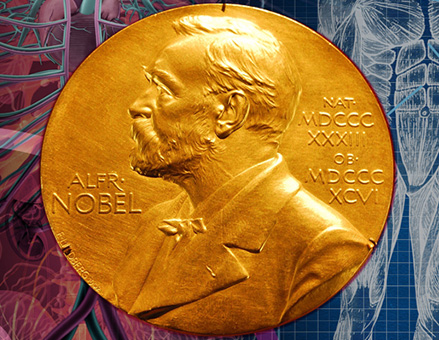

The Nobel Prize in Physiology or Medicine will be awarded on October 7, kicking off a weeklong celebration of groundbreaking achievement in medicine or physiology, physics, chemistry, literature, global peace and economics. We at the American Physiological Society (APS) eagerly await this time of the year too. Physiologists have been well-represented in the long list of Nobel Prize winners. APS is proud to have 79 Nobel Laureates who have published articles in our family of journals.
Becoming a Nobel Laureate—one of the few that have bestowed “the greatest benefit on mankind,” as Alfred Nobel’s will states—can be a transformative event for many scientists. This most prestigious honor is validation for their hard work that, in many cases, has led to life-changing discoveries in science.
You may wonder how a prize of this magnitude—nicknamed the “Olympics of science”—is chosen. The nomination process for the Nobel Prize in Physiology or Medicine is elaborate, and all details about the nominees and the selection process for a given year are sealed for 50 years. However, there are a few things we do know about how the Nobel Committee chooses its top honorees:
- There are about 3,000 qualified nominators who can submit names to the physiology or medicine nominee list. This includes past Nobel Laureates in the areas of physiology or medicine or chemistry and voting members of the Nobel Assembly at Karolinska Institutet in Sweden. A handful of other distinguished scientists around the world are also allowed to nominate for the award, but scientists can’t nominate themselves.
- The nominee or nominees must still be living at the time of their nomination. Posthumous nominations are not allowed.
- Each science category honors no more than three people in a research group, even if many more people contributed to the project. In the early 20th century—the first award was given in 1901—it was much more common and possible for just one or two people to make a major discovery. This isn’t the case in modern science and can be problematic when collaborators aren’t recognized.
- Nominees must be chosen for a specific discovery that has changed lives. They can’t be chosen based on a lifetime of achievements, but they can win more than once for different accomplishments. For example, Marie Curie received the Nobel Prize in Physics in 1903 and in Chemistry in 1911.
As we eagerly await to hear who this year’s winner is, we also want to hear from you. What scientific advancement do you think will rise to the top this year? Share your thoughts in the comments or send us an email.


Erica Roth, MS, is the American Physiological Society’s communications manager. She is a former reference librarian and medical writer.