


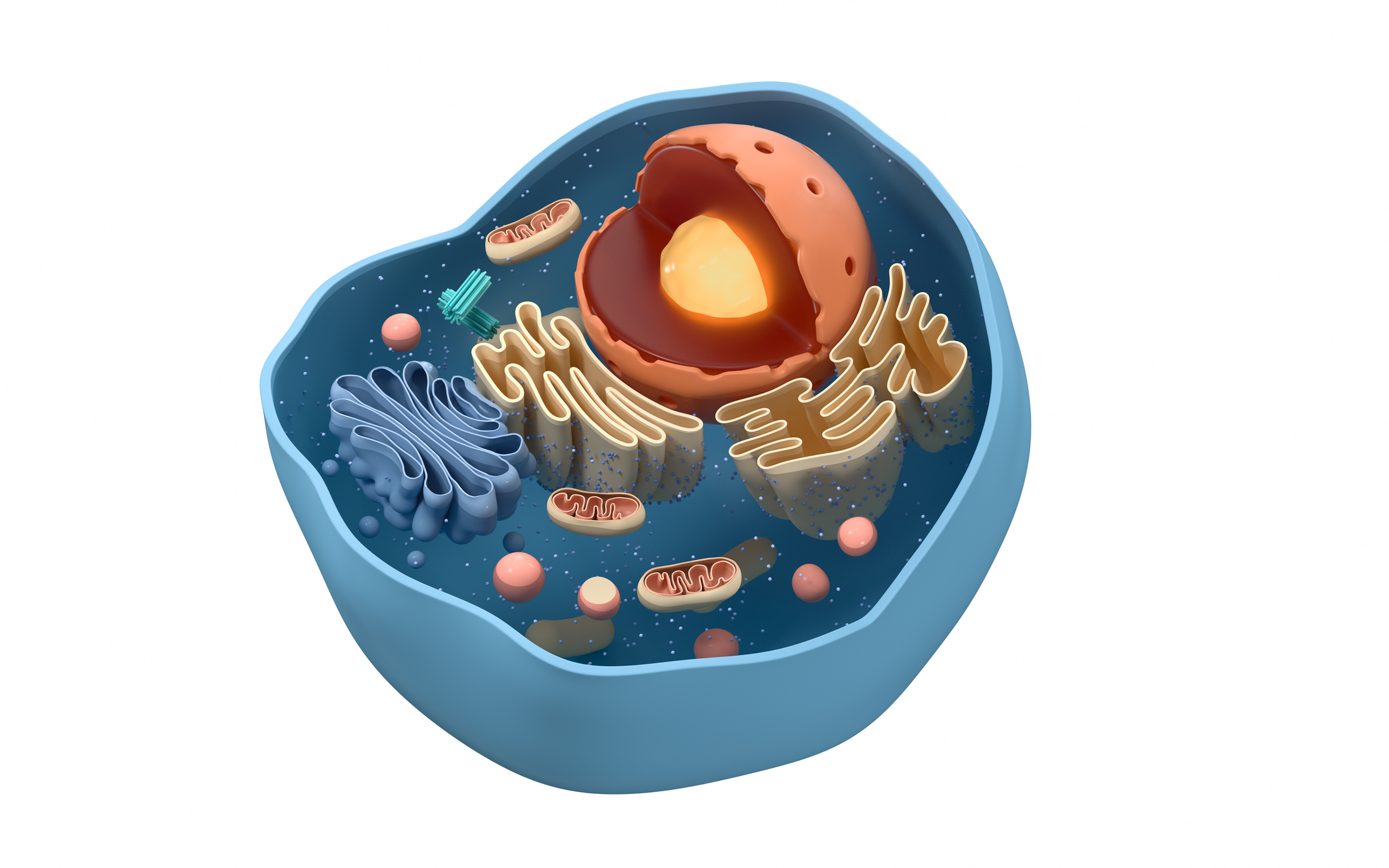

Cells have many different compartments—known as organelles—that have different functions. A commonly known example of an organelle is the “energy center” of the cell called mitochondria. Each organelle has its own important role in cellular function.
One lesser-known organelle is the endoplasmic reticulum (ER). The ER is essential for making and maturing proteins, making fats and maintaining calcium regulation. The ER is the largest membrane-bound organelle in cells that have a nucleus (eukaryotic cells). The structure of the ER is one made of interconnected sheets and tubules. Its relation to the network of fibers that make up the cells’ infrastructure allows the ER to move and change shape as needed.
When you have a disease or other medical condition, cells undergo different forms of stress, such as the inflammatory response, oxidative stress and ER stress. The ER is sensitive to changes in oxidative stress levels, how much calcium is in the cells, and the accumulation of unfolded proteins.
Any of these changes in the cells can trigger a process called the unfolded protein response (UPR). The UPR causes a signaling cascade to break down unfolded proteins, stop the production of proteins and work to restore balance (homeostasis) in the cells.
There are three branches of the UPR, each with a different signaling pathway that produces specific proteins. These proteins help reduce ER stress and oxidative stress. ER stress is an adaptive response to cellular stress. If ER stress is too overwhelming and continues for too long, or if there is too much oxidative stress in the cells, the ER will begin a process called “apoptosis” that initiates cell death. Apoptosis led by the ER is common in the beginning stages of several conditions, such as cardiovascular disease, retinal disease and neurodegeneration.
Following a healthy diet can help prevent ER stress or help your body deal with ER stress you may already have. Studies have shown that a Mediterranean diet supplemented with coenzyme Q 10 helps with ER stress in older adults. Fish oil supplements, quinoa and probiotics can also help with ER stress. As always, it is important to consult with your primary care provider before changing or adding to your diet.


Shaunaci Stevens is a PhD graduate fellow in cellular and molecular physiology at the Penn State College of Medicine in Hershey. Her research focuses on cellular stress responses in diabetes-induced heart disease.