



As a doctoral student studying metabolism and behaviors associated with feeding, my research goal is to determine how peripheral metabolic hormones such as insulin and leptin affect groups of nerve cells (scientists call them “neuron populations”) inside the area of the brain known as the hypothalamus. We typically assess neurons by cutting thin slices of the brain, dyeing them with stains that bind to a specific protein, and observing them using a fluorescent microscope. However, this method only lets us see the cells present within that section—not to mention that sectioning the brain is exceptionally time consuming!
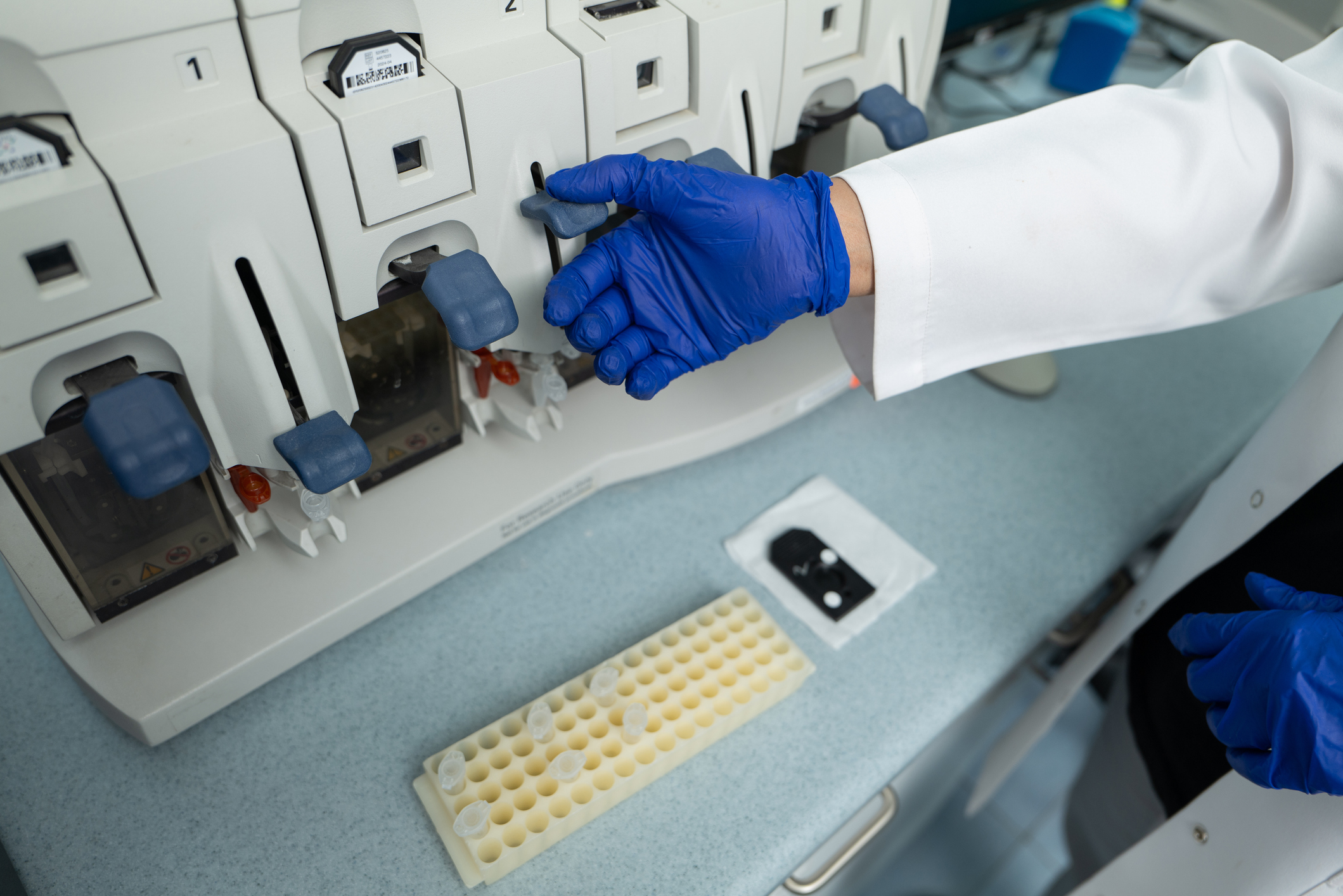
One method I have found invaluable in overcoming these limitations is flow cytometry, which uses a machine equipped with lasers to rapidly analyze cells or particles that have been stained with fluorescent dyes. This technique has allowed me to observe changes in different neuron populations in response to various physiological states, such as fasting or eating a high-fat diet.
My path to using flow cytometry was not a smooth ride. When I began searching for a way to observe changes in hypothalamic neuron populations, my first instinct was to use flow cytometry, as I had previous experience with the technique. My hope was to use fresh brain tissue that was prepared in the same way as when I sectioned brains. I thought this would work well because the concept of flow cytometry and fluorescent microscopy is similar: Stains bind to proteins of interest and different colored lasers illuminate the dyes. But when I ran my stained samples on the flow cytometer, I had trouble seeing the population of cells I was looking for.
Coincidentally, the week after this happened, another department in our building acquired an imaging flow cytometer that pairs the basics of flow cytometry with the visual feedback of microscopy. This is just what I needed to see what my cells looked like once they were stained with the various dyes.
For the first time I could identify cells that weren’t healthy neurons to be excluded from my analysis. I could narrow down my neuronal population based on size, shape and texture as well as the intensity of the dyes illuminated by the various lasers. I could use the analysis software to identify where the stain is located within my cells, what shape my cells are, and if different stains tend to colocalize together.
Going with the flow, literally and metaphorically, has led me to a fulfilling project that I love to work on, though it was not always easy at first. The troubleshooting and pivoting I had to do early on along with endless validation studies of my new approach proved to be challenging. Being on the other side of it all now, I wouldn’t change the journey. When all seems lost, go with the flow. You might find an awesome experience waiting for you.


Madison Hamby is a graduate student in the Physiology and Biophysics Department at the University of Mississippi Medical Center. Her work focuses on the role of degenerin proteins in the development of metabolic syndrome with a focus on hypothalamic feeding and satiety centers.